
How to Run a Sustainable Mobile Coffee Catering Service

Last Updated: November 1, 2026
Quick Summary
A sustainable mobile coffee catering service covers packaging, waste, sourcing, and energy, and each area affects the others. Start with compostable cups that your venue can actually compost, plan portions from guest count, and map bin locations before the event. Measure cups used and waste per event so you can see where to improve.
Confirm the cup is certified compostable, not just labeled eco, and ask whether the venue accepts it in compost bins.
Build your order from guest count and expected drink mix, not a generous guess.
Use bulk sugar and stirrer containers instead of single packets, and label sorting stations for trash, recycling, and compost.
Standard 20-amp, 120-volt circuits support roughly 2,400 watts, so plan to use no more than about 80 percent continuously.
Never route waste water to a storm drain; confirm a drain or sealed holding tank with the venue.
Table of Contents
Why Sustainability Matters for Mobile Coffee Catering
Event guests notice waste. A pile of single-use cups and lids at the end of a wedding or festival tells them the service did not think about the environment. Thunderbird Coffee has spent over 17 years serving weddings, corporate events, and festivals in Austin, Texas.
Sustainability in mobile coffee catering covers packaging, waste, sourcing, and energy. Each part affects the others. A compostable cup does little good if it lands in the landfill bin because no one sorted it. Thoughtful planning across all four areas is what makes a service truly sustainable.
Why does this matter for your business? Clients increasingly ask about environmental practices. Venues often have their own waste rules.
Choosing Compostable Coffee Cups for Events
Compostable cups are the most visible part of a sustainable coffee service. Plant-based cups and lids break down in commercial composting facilities, but they need the right conditions to do so. Check that your venue has a compost stream before you commit.

We recommend a few simple rules:
Match cup size to your drink menu to avoid waste
Confirm the cup is certified compostable, not just labeled "eco"
Ask the venue whether it accepts compostable items in its compost bins
Order a small buffer, since extra cups beat running out mid-service
Reducing Waste Across Every Service
Waste reduction starts before the event. Good portion planning prevents leftover milk, syrup, and pastries from ending up in the bin. Build your order from guest count and expected drink mix, not a generous guess.
During service, a few habits help a lot:
Use reusable serviceware where the venue allows it
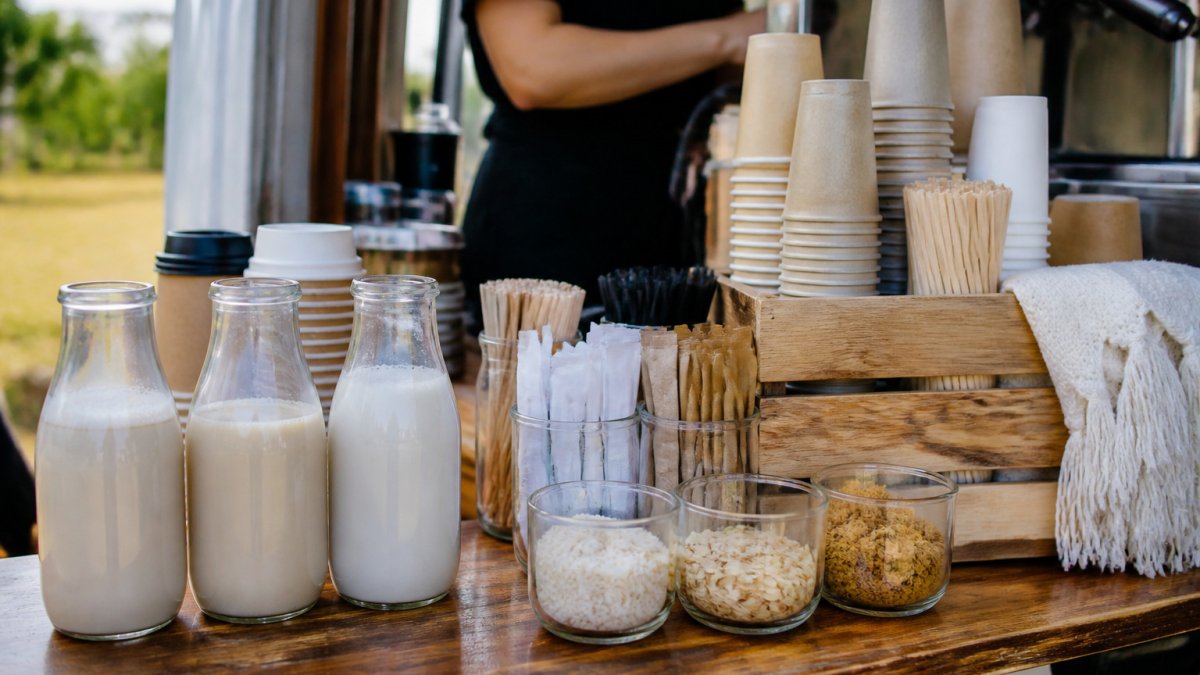
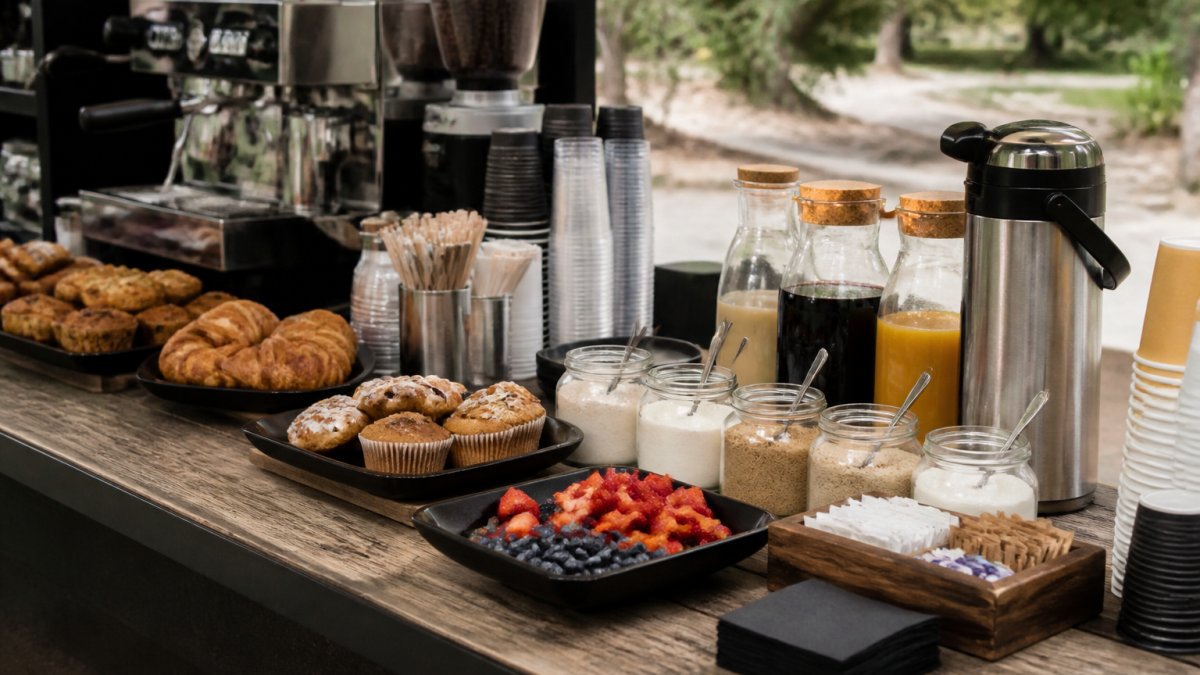
Offer sugar and stirrers in bulk containers, not single packets
Keep a sorting station clearly labeled for trash, recycling, and compost
Assign one person to watch the bins and correct mistakes quickly
Food waste is often the hardest category to control. Plan pastry and snack quantities carefully, and donate unopened items where local rules allow.
Recycling, Composting and Waste Logistics at the Venue
Every venue handles waste differently. Some have full composting programs, while others only collect trash and recycling. Walk the site with the venue manager before the event and map where each bin sits. A coffee station with no nearby compost bin will send compostable cups straight to the landfill.
Plan for pickup timing too. Full bins left in the heat of an outdoor summer event can create odor and attract pests. Agree on who empties the bins and when.
Sourcing Coffee Beans Responsibly
Coffee sourcing affects both the environment and the farmers who grow the beans. Look for roasters who publish their sourcing relationships and can explain where their coffee comes from.
Thunderbird Coffee uses locally roasted, hand-picked beans.
Ask any coffee vendor, including us, about certifications, supplier relationships, and how they handle leftover or spoiled beans.
Power, Water and Energy Planning for a Mobile Cart
Mobile espresso carts depend on power and water, and planning both early prevents problems on event day. This is where mobile coffee catering differs most from fixed foodservice: you cannot assume a dedicated circuit, a plumbed water line, or a floor drain. The plan has to be built around what the venue actually provides.
Build a power budget before you book equipment
Add up the wattage of every device you plan to run: espresso machine, grinder, refrigerator or cooler, lights, POS, and any milk steamer or hot water tower. Compare that total to the circuit the venue can dedicate to the cart. A standard 20-amp, 120-volt circuit supports roughly 2,400 watts, and you should plan to use no more than about 80 percent of that continuously to avoid tripping breakers. If your total exceeds the available circuit, the options are a second dedicated circuit, a generator, or a smaller equipment load.
Energy-efficient equipment matters most at long outdoor events, where a generator runs for hours. Choose machines with insulated boilers, standby modes, and PID temperature control, and turn off the grinder and steamer between rush periods. A common pattern is that the espresso machine and refrigerator together draw the most power, so size those two first and let the rest follow. Refining your power consumption strategy allows you to further minimize your environmental footprint by integrating various eco-friendly brewing methods into your daily workflow.
Plan water supply and waste water separately
Water planning has two halves, and both need a confirmed answer:
Supply: How much water does the cart need per service hour, and where does it come from? Confirm the venue's water source, the distance from the cart to that source, and whether you need a food-grade hose and backflow prevention.
Waste water: Where does used water go? Confirm a drain or a sealed holding tank, and never route waste water to a storm drain. Many venues require a gray-water holding tank that you carry out.
Estimate supply from drink volume: espresso, rinsing, and steam each draw water, and a busy service can use far more than a quiet one. Bring a measured reserve rather than guessing, and check the venue's rules on hose connections and floor protection.
Ask the venue these questions before you book
Is there a dedicated power circuit for the cart, and what is its amperage and voltage?
Where is the nearest water source, and is a food-grade connection available?
Where is the nearest drain, or is a gray-water holding tank required?
Are there shade or weather protections for equipment, and is the service area level?
Is a generator permitted on site, and are there noise or emissions limits?
Pro Tip Bring a circuit tester, a spare heavy-duty extension cord rated for the load, and a written copy of your power and water plan. If a breaker trips or a hose connection fails, having the plan on paper lets the venue manager help you fix it fast.
Match equipment to the event, not the other way around
A long outdoor festival and a two-hour corporate reception need different equipment loads. For shorter indoor events, a single efficient machine on a dedicated circuit may be enough. For all-day outdoor service, plan for generator runtime, fuel, and a water reserve sized to the guest count.
Key Takeaway Power and water are the two constraints that decide whether a mobile cart can run efficiently. Build a wattage budget, confirm supply and waste-water paths in writing, and size equipment to the event rather than defaulting to the biggest setup.
The article breaks power and water planning into concrete checks, summarised below.
Planning item | Value from the article | Note |
Standard circuit capacity | 20 amps at 120 volts, about 2,400 watts | Roughly the load a single standard circuit supports |
Continuous load limit | About 80 percent of circuit capacity | Avoids tripping breakers |
Supply planning | Confirm water source, distance and food-grade hose | Check backflow prevention |
Waste water | Drain or sealed holding tank | Never route to a storm drain |
Water reserve | Sized to drink volume, with a measured reserve | Do not guess |
Generator use | Check runtime, fuel and venue noise limits | Needed for long outdoor events |
Measuring Your Sustainability Performance
You cannot improve what you do not measure. Start with simple numbers: cups used, percentage of compostable items returned to compost, and pounds of trash per event. Track them over several events to see patterns.
A basic spreadsheet is enough for most small operators. Record the guest count, drinks served, waste weight, and any problems. Over time, these notes show where to cut waste and cost.
Building a Sustainable Event Planning Checklist
A checklist keeps sustainability from getting lost in the rush of event day. Use this one as a starting point:
Confirm venue composting and recycling options
Choose compostable or reusable cups and lids
Plan portions based on guest count
Map bin locations before the event starts
Confirm power and water access for the cart
Record waste and drink counts for review
Getting a Sustainable Coffee Service Quote for Your Event
Pricing for a sustainable coffee service depends on guest count, event date, drink menu, and delivery details. Pricing depends on guest count, event date, drink menu, and delivery details. Tell us your guest count, venue, and any sustainability goals, and we will build a plan that fits your event.
Ready to plan a greener coffee service? Get a custom quote from Thunderbird Coffee today and let our baristas handle the details while you focus on your guests.
Frequently Asked Questions
How can mobile coffee catering services reduce waste at events?
Mobile coffee caterers can reduce waste by agreeing on portion sizes with the host, offering reusable or compostable serviceware, and arranging for compost and recycling bins at the venue. Pre-event headcount estimates help avoid over-prepping milk and pastries that end up in the trash. Clear signage at the service point helps guests sort cups and lids correctly. Pricing and package details depend on quantity, dates and delivery, so request a custom quote from Thunderbird Coffee for current options.
What are the most sustainable cups for serving coffee at events?
Reusable cups with a dishwashing plan usually have the lowest lifecycle impact when they are used many times, but they require water, energy and staff time to wash. Compostable cups work well when the venue has commercial composting, since they only break down properly in that setting. Recyclable paper cups depend on local acceptance and are often lined with plastic that complicates recycling. The best choice depends on the venue's waste systems, so confirm what the site can actually process before the event.
How should event organizers evaluate a coffee caterer's sustainability practices?
Ask the caterer which serviceware they use, how they handle leftover milk and grounds, whether they can coordinate with venue composting or recycling, and how they plan power and water use for their equipment. A credible caterer can explain their sourcing choices and describe how they track waste. Requesting a written plan with your quote makes these commitments easier to confirm on the day of the event.
What should a sustainability checklist for mobile coffee catering include?
A useful checklist covers cup and lid choices, reusable serviceware plans, a headcount-based portion plan, waste sorting stations, confirmed compost or recycling access at the venue, power and water requirements for the cart, and a plan for leftover product. It should also list who is responsible for each task and when it must be confirmed. Thunderbird Coffee can help tailor this checklist to your event, and you can request a quote to get started.

Comments