
Benefits of Mobile Coffee at Weddings: A 2026 Guide

Last Updated: October 23, 2026
Quick Summary
The benefits of mobile coffee at weddings include keeping guest energy high during long celebrations, creating a welcoming experience that signals thoughtfulness, and providing a natural gathering point during cocktail hour and late evening without disrupting your event schedule.
Mobile espresso service works at any venue, garden, barn, rooftop, or ballroom, with no permanent installation required.
A skilled barista serves 60-90 seconds per drink, so one professional can handle significant guest volume without long waits.
Custom branded cups, signature drink menus, and personalized touches turn your coffee service into a keepsake and design element.
Professional barista setups accommodate dietary needs with non-dairy milks, decaf, and allergen protocols so every guest feels included.
Budget is driven by guest count, service window length, menu complexity, staffing, and power access, ask for a quote built to your actual timeline.
Table of Contents
Why Mobile Coffee Transforms Your Wedding Reception
A professional barista pulling fresh espresso at your reception creates an experience guests won't forget, the benefits of mobile coffee at weddings include keeping energy high during long celebrations without disrupting your schedule.

The benefits of mobile coffee at weddings go far beyond caffeine: a welcoming coffee station signals you've thought about guests' comfort, starts conversations, and distinguishes your event from standard receptions.
A coffee bar gives guests something to do during natural lulls, between ceremony and dinner, during cocktail hour, or late evening, plus a moment of connection with a barista who crafts their drink exactly how they like it.
Pro Tip The best time to introduce a mobile coffee service is during the cocktail hour or late evening, moments when your guests naturally need an energy lift. Position it where people naturally gather, not tucked away in a corner.
Coffee Cart for Weddings: Flexibility and Setup Advantages
Indoor and Outdoor Venue Compatibility
A mobile espresso bar works at virtually any wedding venue, a garden, historic barn, rooftop terrace, or indoor ballroom. That flexibility is a core advantage of mobile coffee catering.
Outdoor venues present no challenge: a professional setup handles wind, temperature swings, and uneven ground. Indoors, the compact footprint needs no plumbing or permanent installation, your barista arrives, sets up, and integrates into your event flow.
It scales too: whether you're hosting 50 guests or 200, a mobile setup matches your needs without added infrastructure.
Quick Setup and Minimal Disruption
Traditional catering often means hours of advance setup. A mobile coffee cart is different: your barista arrives at a pre-arranged time, positions equipment, and serves within minutes, no construction, no permanent installation, no disruption.
A professional mobile service handles the technical details, water, power, equipment positioning, cleanup, so you can stay present with your guests.
The minimal footprint also keeps you flexible: if weather shifts or your timeline adjusts, a mobile setup adapts easily.
Key Takeaway Mobile coffee service fits into any venue and timeline because it requires no permanent infrastructure. Setup takes minutes, not hours, leaving you free to focus on your celebration.
Elevating Guest Experience with Professional Barista Service
Personalized Drink Preparation
Guests remember details that show thoughtfulness. When a skilled barista asks how they like their espresso and crafts it to preference, that attention stands out, from classic lattes and cappuccinos to custom drinks tailored to your theme.
A professional barista also engages guests, learns names, and remembers preferences, for many, a highlight of the reception.
Your barista also accommodates requests on the spot, a vanilla latte instead of a cappuccino, an extra shot, which pre-made or self-serve coffee can't match.
Managing Guest Volume Without Long Wait Times
Won't a coffee bar create a bottleneck? Not in practice: most drinks take 60-90 seconds, so a single barista can serve a significant number of guests per hour, often enough for typical wedding timelines.
Positioning is key: place your station where guests naturally gather, near the cocktail area, by the dessert table, or in a high-traffic zone, so they encounter it organically.
For larger weddings with concentrated demand, share your guest count and timeline with your barista service so they can staff to the volume.
Wedding Coffee Bar Ideas: Customization and Branding
Custom Drink Menus and Specialty Options
Your wedding coffee service can reflect your personality: many couples create signature drinks named after meaningful moments, inside jokes, or themselves, prepared alongside traditional options.
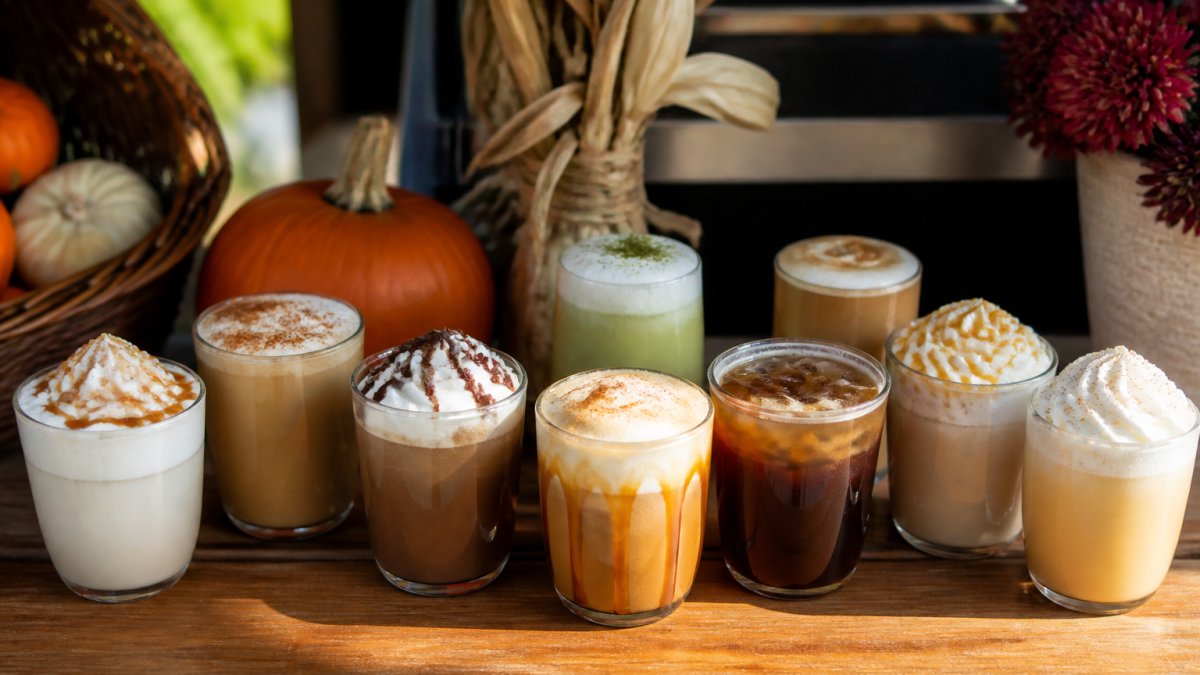
Think beyond standard espresso drinks: seasonal flavors, specialty syrups, and creative combinations let you craft a menu that feels uniquely yours, a "honeymoon blend" cold brew or a latte matching your wedding colors.
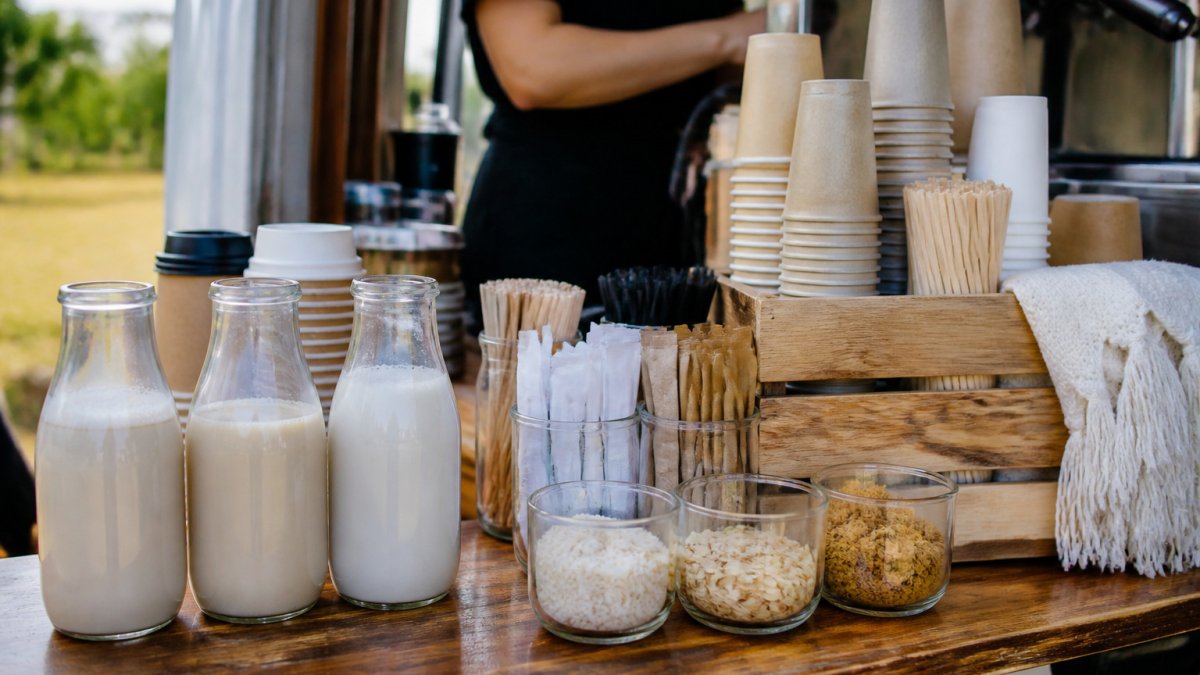
Customization extends to dietary preferences: many professional barista setups offer oat, almond, coconut, and other milks, so guests with restrictions feel included.
Branded Cups and Personalized Touches
Custom branded cups turn your mobile coffee service into a keepsake. Many couples add their names, wedding date, or a meaningful phrase, so guests leave with a tangible reminder of your celebration.
Branded cups also coordinate with your wedding aesthetic, elegant and minimalist or bold and colorful, reinforcing your event's identity.
Personalized signage explaining your drink menu or adding a welcome message creates an impression of thoughtfulness.
Best For Couples who want their mobile coffee service to feel integrated into their wedding's overall aesthetic and brand identity, rather than like a standard vendor setup.
Mobile Espresso Catering Cost: Budget Considerations
What Actually Drives the Quote
Mobile espresso catering is priced on a handful of variables, and understanding how each one moves the number is the difference between a quote that fits your budget and one that surprises you. The primary drivers are:
Guest count and expected cups per guest. A common planning assumption is roughly one to one-and-a-half espresso drinks per guest across the service window, with higher uptake during cocktail hour and late evening.
Service window length. A two-hour cocktail-hour service and a five-hour reception that includes a late-night push require different staffing and restocking. Most providers price by the hour or by a minimum service block, then add for overtime.
Menu complexity. A tight menu of espresso, Americano, latte, and cappuccino moves faster and costs less to provision than a long specialty list with multiple syrups, cold brew on tap, or made-to-order seasonal drinks. Every added build step slows the line and adds ingredient cost.
Staffing. One barista can typically turn a significant number of drinks per hour on a focused menu. For larger events or during a concentrated rush, additional baristas can help keep waits short.
Equipment and power. Espresso machines draw significant wattage. Venues that provide dedicated circuits near the setup spot avoid the cost of generators or long cable runs; venues that don't may add a generator rental or a power-access fee.
Add-ons. Branded cups, custom signage, a signature-drink menu card, non-dairy milk volume, and delivery distance all appear as separate lines on most quotes.
Service Models and Their Trade-Offs
Pricing for mobile espresso catering often involves different service models, and understanding these structures can help you plan your budget:
Consumption-based (per drink). You pay for what's poured, often with a minimum. Best when you expect moderate uptake and want to avoid paying for drinks nobody orders. Risk: a busy late-night crowd can push the total above a flat-fee estimate.
Flat fee for a service block. You pay for a set number of hours and a set menu, unlimited within reason. Best when you want budget certainty and expect high uptake. Risk: you may overpay if attendance or appetite is lower than planned.
Hybrid. A base fee covers setup, staffing, and a drink allowance, with overage billed per drink. This is the most common structure for weddings because it balances certainty with flexibility.
How It Compares to Other Reception Amenities
Mobile coffee can be a valuable reception enhancement. When you compare quotes, normalizing them to cost per guest and cost per service hour can help you compare options effectively.
A Budget-Control Checklist
Before you sign, get answers in writing to these questions:
What is the minimum spend or minimum guest count?
Is overtime billed hourly?
Are non-dairy milks, syrups, and decaf included or extra?
Is there a travel or delivery fee?
Does the venue charge a power-access or vendor fee?
What is the deposit and the cancellation policy?
Pro Tip Ask for a sample quote built around your actual guest count and timeline rather than a generic rate sheet. The variables above interact, and a provider who walks you through each line is usually the one who will also flag costs you hadn't considered.
Key Takeaway Budget control comes from understanding the drivers, guest count, service window, menu complexity, staffing, and power, and from normalizing every quote to cost per guest and cost per service hour.
Aesthetic Appeal and Event Decor Integration
A well-designed mobile bar becomes a design element itself, and the sight of a skilled barista at work adds energy to the space.
The equipment and setup can be styled to match your color scheme and theme, rustic, modern, elegant, or playful.
Positioning your mobile bar in a high-visibility area turns it into a focal point that enhances your reception's design.
Sustainability and Inclusive Service Practices
Eco-Friendly Options and Waste Reduction
Couples interested in eco-friendly options can inquire about operational choices that help reduce waste.
Cups and lids. Compostable cups only break down in a commercial composting stream, a landfill-bound one behaves like a conventional cup. Ask whether the provider has a composting partner.
Milk and ingredient waste. Dairy is the largest waste and emissions line in most espresso service.
Coffee grounds and spent supplies. Spent grounds are a valuable compost input; a provider who bags them for the venue's garden or a local compost program does more than one who bins them.
Water and energy. Espresso machines and dish rinsing use water; generators use fuel. A provider running on venue power rather than a generator, and using efficient rinse practices, lowers the footprint.
Pro Tip Ask your provider about their waste plan.
Accommodating Dietary Restrictions and Allergies
Inclusive coffee service is a protocol question, not just a menu question.
Non-dairy milks. Oat, almond, soy, and coconut should be standard, not special requests, and should be stored and steamed with dedicated pitchers to avoid cross-contact.
Decaf. A meaningful share of guests avoid caffeine in the evening. A provider that offers decaf espresso as a standard option, not a hidden request, keeps late-night service inclusive.
Allergens and cross-contact. For guests with severe nut or dairy allergies, the critical questions are about shared steam wands, pitchers, and syrups.
Sugar-free and specialty diets. Sugar-free syrups and the ability to make a plain espresso or Americano with no added sugar cover most requests.
Key Takeaway Sustainability and inclusivity are important considerations. Ask about waste management, available milk options, decaf, and cross-contact protocols.
Frequently Asked Questions
How does mobile coffee catering work for weddings?
Mobile coffee catering brings a fully equipped espresso bar directly to your venue. A professional barista arrives before your reception, sets up the equipment, and prepares hand-crafted drinks for your guests throughout the event. The barista manages all service, cleanup, and logistics, so you can focus on your celebration. Setup typically takes 30-45 minutes depending on venue layout and power access.
Can a mobile espresso bar handle 150+ wedding guests without long wait times?
Yes, professional mobile coffee services are designed to serve large guest counts efficiently. A trained barista can prepare multiple drinks simultaneously, and setups are designed to accommodate a significant number of guests per hour. For larger weddings, communicating your guest count upfront is key so the vendor can plan accordingly and position the bar in an accessible location.
What wedding coffee bar ideas can we customize with our branding?
Most mobile coffee vendors offer branded customization options including personalized cups with your names and wedding date, custom signage, and specialty drink menus named after you or your story. Some also accommodate color schemes that match your wedding aesthetic. Discuss your vision during the planning phase so the vendor can source materials and design options that align with your event's overall look and feel.
What makes hiring a professional barista better than a DIY coffee setup?
A professional barista brings expertise in drink preparation, equipment operation, and guest service. They handle all technical details, troubleshooting, and cleanup, eliminating stress on your wedding day. Professional baristas also know how to manage timing, create specialty drinks, and adapt to guest preferences in real time. This allows you and your guests to enjoy quality coffee without worrying about setup or service logistics.
Book Today
Add thunderbirdcoffee.com as a preferred source on Google →
Comments